


Engineering A New Architecture
Driver technology has shaped the identity and performance of every personal audio device since its inception. While trends shift and formats come and go, the fundamental question remains unchanged: how do you create sound that accurately reproduces real life, and even bring out emotional weight in music, games, cinema, and other media?
The Dynamic Driver

Dynamic drivers answered that for decades, and they remain the foundation of modern portable audio for good reason.
At its most basic, a driver consists of a small sheet called the ‘diaphragm’ that is pushed back and forth by an electromagnet. As the magnet moves back and forth, the diaphragm vibrates the air and creates sound. In a dynamic driver, that electromagnet is attached to the back of a small dome that is suspended in a stretchy ‘surround’ that holds the dome in place.
The design is simple, reliable, and efficient. And when executed with the right engineering and high manufacturing precision, dynamic drivers deliver a sound signature that feels grounded and human. Bass has physicality, mids carry weight and texture without being grating, and the overall presentation feels full without relying on artificial enhancements.
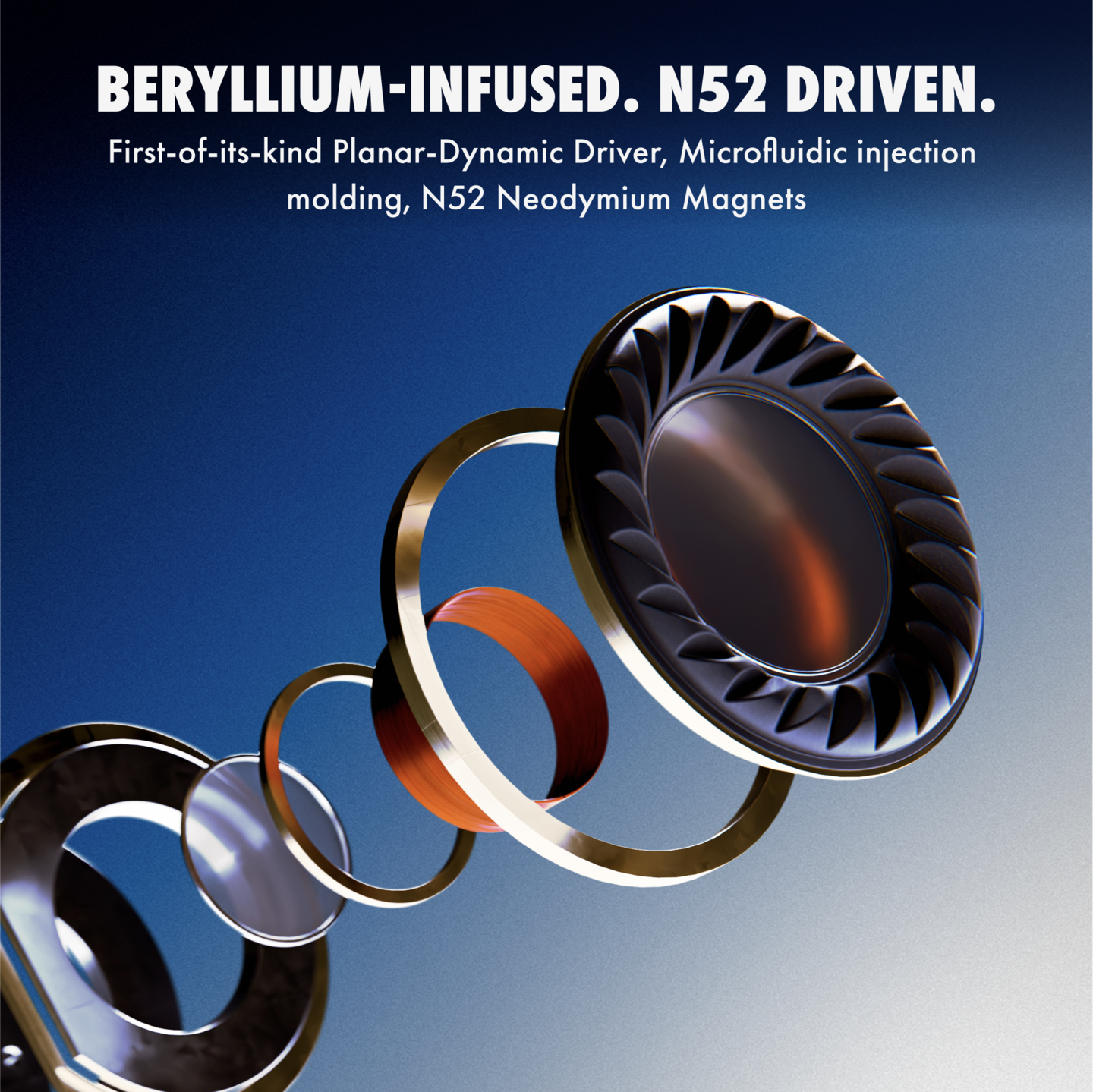
This is why SANWEAR was built around beryllium-infused composite diaphragms paired with neodymium assemblies. The stiffness-to-mass ratio and structural integrity of these materials elevate dynamic driver performance far beyond traditional materials.
However, even the most advanced dynamic designs reach a natural limit. The part of the diaphragm that produces the most accurate sound, the dome, is significantly smaller than the surround, which stretches and flexes as it is powered. This stretching can cause distortion and unwanted artifacts in the final output, especially in a smaller earbud form factor.
The Planar-Magnetic Driver

Planar-magnetic drivers emerged as a viable solution to those limitations. Instead of a coil moving part of a dome, planar drivers use an ultra-thin, completely flat diaphragm embedded with conductive traces, suspended between symmetrical magnetic arrays. The entire surface moves uniformly, compared to normal diaphragms that flex more in the middle, which drastically reduces distortion and improves responsiveness.
The result is a presentation defined by clarity, stability, and accuracy. Transient sounds snap into focus, fine textures emerge more effortlessly, and spatial cues become more precise and pronounced. Not from any artificial enhancement, but from maximizing the movement of air moved by the motion of the diaphragm.
Yet planar-magnetic drivers have limitations of their own. Their bass is clean but often lacks the physical body, resonance, and punchiness that listeners associate with these lower frequencies. They are less efficient and traditionally require more power to perform optimally. They can also feel emotionally too sanitized, and clinical, often when deployed without thoughtful tuning.
These qualities make planar technology technically and performatively impressive, but not always the best solution in personal listening devices, or gaming-oriented audio.
A Merging of Worlds
The question SAN Sound confronted was not which driver type was superior but how we could preserve the strengths of each without inheriting their weaknesses. And if it was possible to begin with.
This led to the development of the Planar-Dynamic Driver: integrating the speed and uniformity of planar motion with the physical authority and emotional weight of dynamic air displacement. . We took the base of a dynamic system, and through extremely precise microfluidic engineering, altered the shape of the diaphragm.
Instead of a small dome suspended in a surround, we expanded and flattened the center part of the diaphragm that produces the most accurate sound, creating an effectively planar surface. This gives the clarity associated with planar-magnetic drivers while maintaining the powerful excursion of a dynamic.
The best of both worlds from one single driver.
Bass extends deeply while remaining disciplined and tonally stable. Voices and instruments sound lifelike without drifting into excessive warmth or unnatural thinness. Treble remains smooth and articulate, never harsh or cracking such as when traditional drivers are pushed toward their limits.
Spatial imaging benefits more from this structure as the more uniform diaphragm surface, and subsequent throw of air, reduces irregularities that result in clearer positional cues, more stable stereo separation, and a more holographic and definitive soundstage. This becomes especially advantageous in gaming environments where micro-detail and directional accuracy directly impacts victories, or deaths.
Driving The New Baseline
Planar-Dynamic embodies the evolution of SAN Sound’s engineering philosophy. It respects the legacy of dynamic drivers while upgrading the precision and speed that modern listeners deserve. It incorporates the advantages of planar without sacrificing the realism and emotionality that’s defined by dynamic.
Most importantly, it establishes a foundation for the future of SAN.
Learn why gamers and audiophiles are choosing SANWEAR's gaming earbuds over traditional headsets.
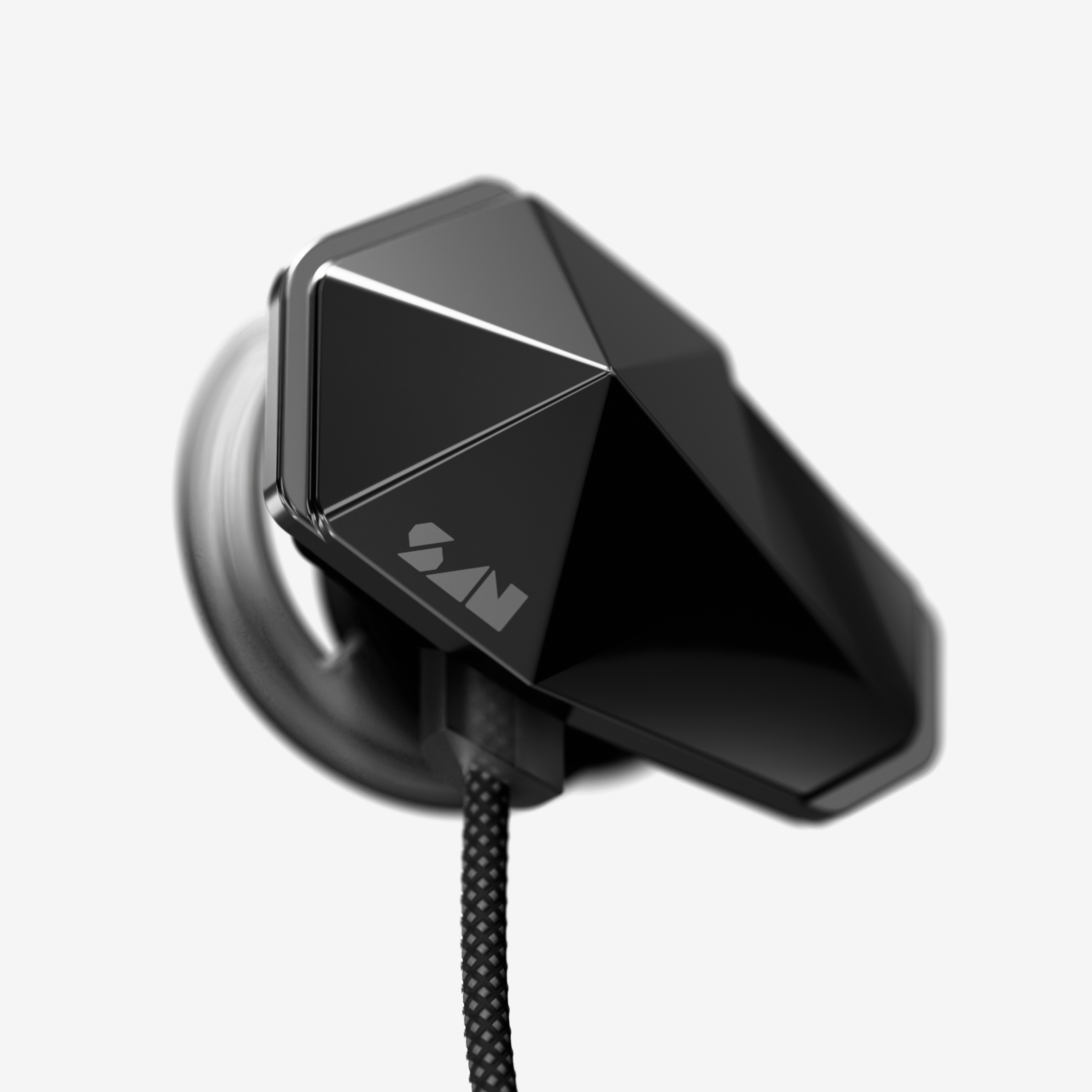
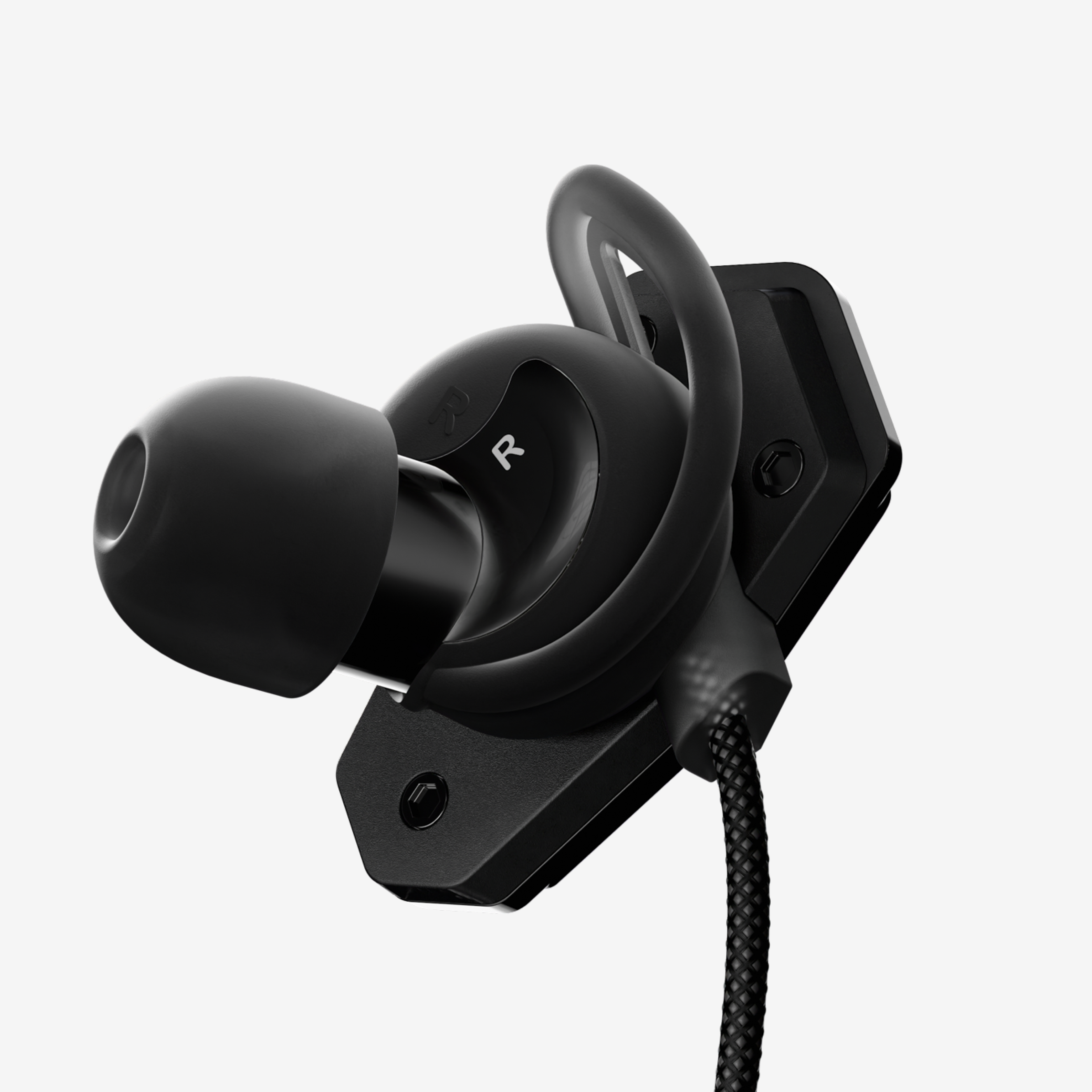
SANWEAR-HARDWIRE is AVAILABLE NOW for $99
Explore The New Baseline | Discover Hyper Reality Audio
//END TRANSMISSION//










共有:
Do Earbuds Really Sound as Good as Headsets?
Beyond Comfort: Merging Ergonomics With Sound Fidelity